Banking in Poland

Banking in Poland is relatively easy for tourists with plastic. Just walk up to any ATM and get some zlotys, making sure they aren’t the old ones. Zlotys with dates earlier than 1995 are basically worthless.

Even though Poland has joined the European Union, it in not yet part of the European Monetary Union, and does not use the euro. The Polish would like to take the next step as soon as possible.

It is quite difficult to establish a bank account in Poland without residency, and this is even harder to obtain. So here is a list of the major banks in Poland worth dealing with – for credit card advances and transferring money.

Warsaw

American Express
ul. Krakowskie Przedmiescie 11
Phone: (02) 635-2002

Bank PKO Rotunda
ul. Marszalkowka 100/102
Phone: (02) 226 00 61

Bank Inicjatyw Gospodarczych
ul. Kopernika 36/40
Phone: (02) 657 5185

Bank PKO S.A
pl. Bankowy 2
Phone: (02) 637-1000

Krakow

American Express
al. Folcha 1
(in the Hotel Cracovia)
Phone: (012) 21 98 80 or (012) 22 46 32

American Express
Rynek 41
Phone: (012) 22 11 57

Bank PKO S.A.
Rynek 31
Phone: (012) 22 60 22

Emergency Telephone Numbers in Poland

Warsaw
Police emergency 997
Fire emergency 998
Ambulance 999
Police headquarters (022) 26 24 24

Krakow
Police emergency 997
Fire emergency 998
Ambulance 999
Police headquarters (012) 21 00 20 or (012) 10 71 15

Directory assistance (all of Poland): 913

Using the telephone in Poland can be a challenge, unless you are in a classy hotel. Working public telephones are few, especially in Warsaw. You must buy a prepaid telephone card to use the public phones, and this must be done in ADVANCE of your wanting to make a call. The machines do not take coins.

Too Much for One, Not Enough for Two

“Too much for one and not enough for two,” can be said about magnums of wine in France, and about half-liters of Vodka in Poland. Drinking in Poland is more than the national pastime; it’s part of the way of life here, and a rebellion from life itself. So don’t ever buy a half-liter of vodka in Poland. It is best to buy at least two liters.

Unbelievably, you can thank eighth-century Moroccans for alcohol; it was first distilled there. In the eleventh-century a vodka-like spirit was being created from wine in Italy, to the Italians it was known as aqua vitae or “water of life.”

At first alchemists kept the secret of distillation, and pharmacists came into existence to supply the masses with this elixir of health. It truly was a health aid in those days, killing bacteria in one’s drinking water was a necessity until modern times.

In fact the physicians and pharmacists of the day all agreed that getting drunk once or twice a month fortified the stomach and alcohol was often prescribed as a curative. As late as the nineteenth century two Polish physicians (a father and son) stated that: “to be healthy in Poland, pharmacies and doctors should not be used, but rather twice a year one should get properly drunk. Once in May instead with a mineral water cure, and the second time in October to avoid catarrh, pneumonia and phlogistic (inflammatory) diseases.”

Distilled spirits reached Poland from Italy or Germany in the 1600’s, and some of the distilleries operating in Poland today are direct descendants of these ancient businesses. Popular spirits consumed in Poland these days include Absinthe, Beer, Wine, and Vodka, with the Polish drinking substantially more wine than the average American. And as drinking is allowed at age 16 in Poland, it seems to be an integral part of the society, and may or may not be somewhat of a problem.

Paradoxically it seems the Polish have a reputation for being drunks, but only get drunk on special occasions. But any excuse seems to be enough to crack open that bottle of Vodka. What the Polish drink varies by economic class greatly. The comparatively rich city-dwellers import wines, liqueurs, and spirits of quality from abroad; and the working classes drink beer, cheap vodka and black-market spirits of dubious quality.

Drinking in Poland increased dramatically during the Communist era, when life was so grim, getting drunk was the only thing to look forward to. These days the Polish may drink less, but with a long tradition of being regarded as a healthful substance, it is still socially accepted. In fact there seems to be some scorn expressed by the average Pole for someone who doesn’t drink occasionally.

So when in Poland get out there and hoist a few, if you want to be accepted. It’s traditional!

Ancient Architecture of Krakow

Krakow was the capital of Poland for centuries, long before Warsaw even came into existence. Krakow’s buildings survived World War Two virtually untouched, unlike poor Warsaw. Other atrocities were reserved for Krakow, but we are thankful the city remains as it was, a gem and a joy to visit.

Considered by most Poles as the Cradle of the Nation, Krakow (or Crakow) is on the banks of the River Vistula. The city was founded in 966, on a hill named Wavel above a large bend in the river. From this commanding view the royalty ruled Poland.
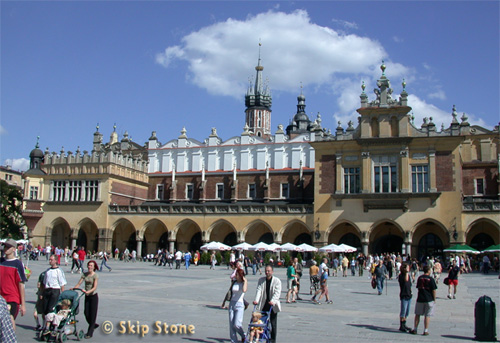
Krakow’s Old Town Cloth Hall

The major architectural wonders of Krakow besides the castle are in the Old Town at the foot of the castle. St. Mary’s Church and the Old Town’s Cloth Hall are in the middle of the town square.

In fact, walking around Krakow is remarkably easy, via the Planty Park. This ring of peace, vegetation and thousands of trees literally surrounds the Old Town of Krakow. This is where fortifications surrounding the city were begun in the 13th century, and it took almost two centuries to encircle the town with a 3km long chain of double defensive walls complete with 47 towers and 7 main entrance gates plus a wide moat. This was eventually destroyed by the ‘Republic of Krakow’ in the 1800’s, and the moat filled in. The ring-shaped Planty Park was created on the site. The city is bisected by the ‘Royal Way,’ the route followed by the coronation procession of the kings of Poland from the Church of St.Florian through to the Wawel and then on to the Paulite Church Na Skalce.

Walking around the Planty you can see remains of the old city gates, and you will pass the the Barbakan. Built about 1498 based on Arabic rather than European defensive architecture, it is a moated brick structure with an inner courtyard and seven turrets. Its 3-metre thick walls have 130 loopholes for archers to defend the gate from.
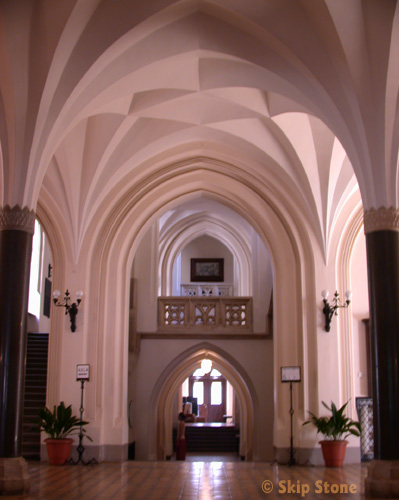
Krakow University

On this walk around the Planty Park, you will also pass the Krakow Academy or University, which was founded in 1364. This is where such luminaries as Copernicus and Pope John Paul II studied. There is a museum in the college, and the buildings are open to visitors. Be sure to check out the amazing ceilings in the Collegium Maius.

Krakow’s Rynek, or Town Square, is the largest mediaeval square in Poland and probably in all of Europe. Designed in 1257, it has remained intact to this day. As well as being the commercial hub of Krakow, the Rynek was the scene of many state occasions.

The Rynek is dominated by the great Cloth Hall (Sukiennice), which was built in the 14th century by Krakow’s famous and wealthy cloth merchants. Destroyed by fire in 1555, and rebuilt in Renaissance style by an Italian from Padua, so the Cloth Hall seems more Italian than Northern European, and is outstanding. The ground floor still functions as a market, albeit for tourists, filled with crafts and souvenirs and is ornamented by the coats of arms of Polish cities.

Nearby is the Town Hall Tower, or the Ratusz. This is all that remains of the 14th century town hall pulled down in the 1820s, but the view from the top is stupendous.

St Adalbert’s Church is in the southeastern corner. The oldest building in the square and the first church founded in Krakow, is named for a Slav Bishop. It’s basement houses a museum of history for the Rynek.

A little bit of a walk from the Old Town is the Jewish Quarter known as Kazimierz, with its empty buildings left undestroyed by the retreating Nazis. They did destroy almost every Jewish man, woman and child from here, leaving an empty shell full of ghosts. There were once 70,000 people here, now around 600 remain. But walking around here one is struck with the vibrance that once was the Kazimierz, and at every turn you have to wonder where everyone went.

Originally an independent town with its own charter and laws, Kazimierz was founded in 1335. Thanks to the granting of special privileges the town grew rapidly and soon had a town hall and market square almost as large as Krakow’s. In 1495, Krakow’s entire Jewish population was moved into the area (the population had grown rapidly in the 1330s when Kazimierz offered the Jews shelter from persecution in the rest of Europe); it became one of the great centres of European Jewery. Descriptions of Kazimierz in Polish art and literature suggest something special about the Oriental atmosphere of the place. Most of the residents were exterminated at nearby Auschwitz during World War Two.

In Kazimierz you will find Europe’s second-oldest Synagogue, and a graveyard complete with it’s own wailing wall made from the ancient headstones broken by the invading Nazis.

After the Nazis came the Soviets, and they did little to help Krakow or Poland after the war. The Soviets built a model factory town nearby, called Nowa Huta, and from 1949 the town’s smokestacks spewed thousands of tons of pollutants on the area.

The Polish have recently begun to clean up the traces of the Soviets, and most buildings have been remodeled and freshly painted. Krakow is a beautiful gem worth polishing, and a friendly city to visit.

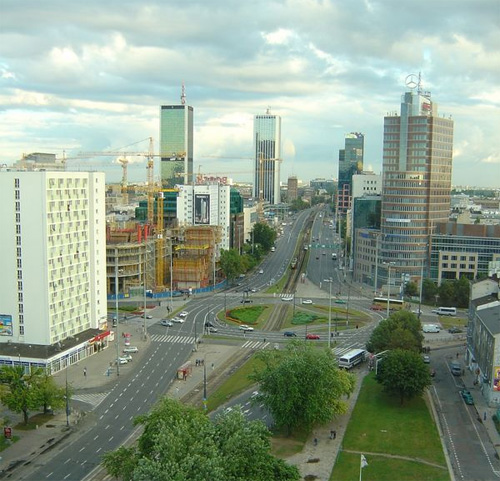
Architecture of Modern Warsaw

As we all know from films such as ‘The Pianist,” Warsaw was almost completely destroyed by the retreating Germans at the end of World War Two.

modern warsaw

Modern Warsaw

To my astonishment, Warsaw has been rebuilt, brick by brick into an amazing place. In fact the Old Town is now on the UNESCO World Heritage List. The Old Town area has been beautifully restored, offering an array of cafes and shops for tourists as they visit with Warsaw’s many ghosts.

Continue reading

Banking in Spain

Banking in Spain for Tourists and Long-Term Ex-Pats

Visiting your local bank in Spain has become painless indeed since Franco died. Now in the year 2005, there is at least one English-speaking ‘bank officer’ on hand in just about any branch in southern Spain. They like showing off their mastery languages as they open ‘tourist’ accounts with glee.

An added bonus for us technology worshipping ex-pats is that most of their websites are also in several languages for ease of use.

Here is an almost complete list of banks in Spain, including the website addresses for each:

Continue reading

Flea Markets and More in Brussels

Belgium has been a center of the art world for centuries, and the flea markets abound with some amazing finds. Bring a flashlight to look thru dusty stacks of canvases, and a magnifying glass for checking out those ancient sterling silver or gold hallmarks. Generally be prepared to have fun, but you might get dusty and thirsty.

The antiques markets in the area of Place du Grand Sablon are the best, and offer a myriad of objects d’art for visitors on the maze of streets emanating from the square, and in the square itself. Saturdays from 9 am to 5 pm, Sundays 9 am to 1 pm. Famous for antiques from the 1900’s thru the ‘30s and furniture especially.

Daily there is a Flea Market (the Marche aux Puces ) at the Place du Jeu de Balle, near the Palais de Justice. It opens at 7 am and closes around 2 pm, an early-bird type of thing.

Also for fun is the Boulevard de la Woluwe open only on the First Sunday of every month from 8 am until 1 pm. Then there is the Westland Shopping Center on Sundays from 8 am until 1 pm; and the Auderghem at Place Pinoy, also only on Sundays, but from 7am until 1 pm.

Just imagine what you can find here in Brussels at the Flea Market!

Shopping Centers and the Malls of Brussels

Got an urge to go shopping for something special?
Well here are some choices for designer fashions, gifts, and more:

Anspach Center
Boulevard Anspach
100 Brussels

Basilix Shopping Center
420 Avenue Charles-Quint
1082 Brussels

City 2
Rue Neuve 123
1000 Brussels

Espace Galerie Louise
Av de la Toison d’Or Goulet Louise
1050 Brussels

Fort Jaco Shopping Center
1384 Chee de Waterloo
1180 Brussels

Galerie Toison d’Or
Av de la Toison d’Or
1050 Brussels

Galerie Saint Hubert
Galerie de la Reine
1000 Brussels

Shopping Center de la Bascule
Chee de Waterloo 699
1180 Brussels

Wesland Shopping Center
433 Boulevard S. Dupuis
1070 Brussels

Woluwe Shopping Center
Croisement Boulevard de le Woluwe
Avenue Paul Hymans
1200 Brussels

Golfing in Belgium near Brussels

Golf in Brussels

Brussels is surrounded by the beautiful green countryside of Belgium, and offers some fine golfing for enthusiasts. Contact the Federation Royale Belge de Golf online at www.golfbelgium.be for more information about golfing.

Here is a list of the best near Brussels:

Royal Amicale Anderlecht Golf
18 Holes
Rue Scholle 1, 1070 Brussels
02 521 16 87
Fax 02 521 51 56

Golf du Chateau de la Bawette
27 Holes
Chee du Chateau de la Bawette 5
1300 Wavre
010 22 33 32
Fax 010 22 90 04

Continue reading

A Quick History of Belgium, Brussels, and Bruges

A Quick History of Belgium, Brussels, and Bruges

Around 57 BC Rome extended its empire into the area now known as Belgium; it was inhabited by a Celtic tribe calling themselves the Belgae. Julius Caesar named the region Gallia Belgica, and Rome held power here until the fourth century AD, when the Franks took control. Word was that the Franks (a Germanic tribe) were actually Roman mercenaries, who were paid off with a reward of this area, which was called Gaul by then.

The Franks established their own dynasty, the Merovingian, and made its capitol in Tournai. By the year 500 AD the Romans had been completely eliminated from the area, which included Belgium, as well as large areas of France and Germany. The emperor Clovis adopted Christianity, and gained the support of the Church. (There are some fascinating footnotes to this historical period to be found in Dan Brown’s excellent novel “The Da Vinci Code”).

Continue reading