The Universal Forum of Cultures – Barcelona 2004 Opening Ceremonies

Barcelona 2004 is a multi-cultural event planned for the whole world to attend and learn. The Universal Forum of Cultures is not only a conference, but a celebration of cultures and diversity from around the world. The event will run from May 9 to 26 September, 2004.

The press office has just released ambitious plans for the opening and closing ceremonies, you may read their official press release below:

Continue reading

Quiche Lorraine

Quiche became popular in the U.S. during the 1950’s. Consisting of mainly vegetarian ingredients, it acquired the “real men don’t eat quiche” label in the macho American society, only to blossom into widespread popularity during the later 20th century. Nowadays there are many kinds of quiche, from the original quiche Lorraine, to ones with all sorts of veggies including broccoli and mushrooms. Other ingredients popular in a quiche are ham and/or seafood (primarily shellfish). Serve a quiche at any meal, and almost anyone will enjoy it!

Continue reading

Blue Cheese Onion Pie

Blue Cheese Onion Pie

Traditionally an onion pie would be made with crumbled bacon bits, and came from the Alsace region of France. My interpretation leaves out the bacon, and replaces that flavor with blue cheese. I prefer to use a bio, or organic cheese made in France. The quality of most ingredients in European foods is far superior to those in America, and you might consider using entirely organic ingredients to achieve the same flavor and satisfaction anywhere you are.

Continue reading

First service station with biodiesel in Spain

First service station with biodiesel in Spain
CIVITAS2004-Sustainable Development News
02/27/03

TÀRREGA, Lleida, February 25, 2003 – A service station in the town of Tàrrega, in the Lleida region, has opened the first pump in Spain that supplies biodiesel, which is partly made up of vegetable-based oils. This fuel pollutes less, reduces noise and prolongs the life of the engine because lubrication is improved.

The biofuel, sold under the name of BDP 30 in the Petromiralles service station at the national N-11 motorway exit at the municipal limit of Tàrrega, is a blend of 30% vegetable-based oils and 70% diesel and is biodegradable and 30% less polluting than traditional diesel.

This ecological fuel is sold at the same price as conventional diesel and can be used in all vehicles that run on diesel. It is produced by the manufacturing plant Stocks del Vallés in collaboration with the Catalan Energy Institute of the Generalitat (Regional Government) of Catalonia. The Catalan government envisages that, by 2010, 8% of all diesel consumed in Catalonia will be bio-diesel, in keeping with the European norms on fuel consumption.

The distributing company, Petromiralles, is to install another five pumps with the same type of fuel in the towns of Figueres, Igualada, Vilafranca del Penedès, Cercs and the port area of Barcelona.

Continue reading

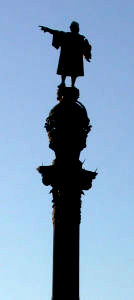
Mirador de Colon – Columbus Tower

At the end of La Rambla, by the Barcelona harbor, you will find the Mirador de Colon, with a statue of Christopher Columbus on top.

Take a ride to the top in the elevator, and you’ll see Barcelona spread out under your feet. Glimpse the hustling, bustling modern city from a perch 60 meters above the harbor. Walk around the viewing gallery for a vista of not only the city and it’s major sights, but the mountains to the west, and the Mediterranean sea to the east.

Continue reading

Emergency & Useful Phone Numbers

Emergencies:

Medical emergencies 061

General emergencies 112

Fire service 080

Guàrdia Urbana (local police) 092

Mossos d’Esquadra Catalan police force
Emergencies and traffic accidents 088

Policía Nacional 091

Guardia Civil police force 062

Hospital General de la Vall d’Hebron 93 274 61 00

Hospital Clínic i Provincial 93 227 54 00

Hospital de la Santa Creu i Sant Pau 93 291 91 91

Hospital del Mar 93 248 90 11/10

Hospital Sant Joan de Deu 93 253 21 00

Duty Magistrates’ Courts (24-hours services) 93 567 31 40

Funeral Services 93 484 17 00

Round-the clock social care office 900 703 030

Office for Non-Discrimination 93 304 31 18

Telegrams by telephone 93 322 20 00

Taxis (Audiotex telephone) catalalan: 93 481 00 85
castilian: 93 481 10 85

Special taxis for people with reduced mobility) 93 420 80 88

Veterinary surgeons (24-hours services) 93 205 31 16

Information on duty pharmacies 93 481 00 60

Medicines. Night home delivery
(only for suscribers) 93 218 88 88
The Dutch Experience by Nol van Schaik

The Dutch Experience
The inside story: 30 years of hash and grass coffeeshops
By Nol van Schaik

Reviewed by Skip Stone

BUY THIS BOOK!


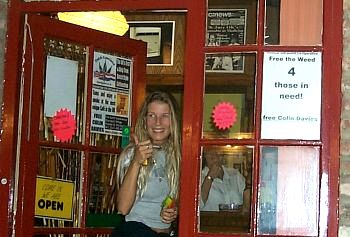
With this compelling book, Nol van Schaik, has done what no one else dared; expose the inside workings of the Dutch Coffeeshop system. In doing so, he reveals the truth about the Dutch cannabis trade, how it came to be and why it’s so successful. He also challenges the authorities in every country that oppress their cannabis users to come up with a more humane and tolerant way to deal with these controversial issues.

Continue reading

Gràcia District

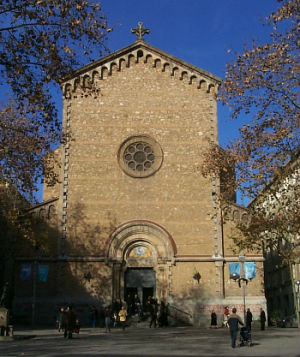
Once a separate town, Gràcia was swallowed up by Barcelona, and now is surrounded by the city. Gràcia’s narrow streets stretch up into the hills above Barcelona making it easy to navigate as you’re either heading up or down. Home to Barcelona’s working classes, students and anarchists, it’s a very lively mix and a popular place to visit for those hip to the scene. Shops, markets and restaurants are all a bit cheaper here, and the popular lunch menu can easily be found here for less than 7 Euros. There are many plazas in the district, some with picturesque statues or churches. In the evenings these places are where people young and old meet for conversation, food and entertainment.

Continue reading

Parc de la Ciutadella

Parc de la Ciutadella

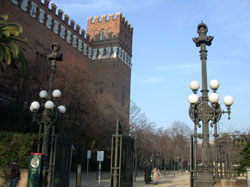
Barcelona’s Old Town grew around the features of La Rambla with it’s wide avenue leading to the sea, the Barri Gotic with its winding streets, La Ribera and it’s amazing mansions, and the Parc de la Ciutadella which features several huge, important museums of art and culture.

The Parc de la Ciutadella has a long and interesting history. Originally this was a fortress designed in the shape of a star, in 1715 by Prosper Verboom (possibly a Dutchman?) for then King Felipe V. The Citadel was built to be used by his forces against the Bourbon kings. Following an 18 month seige, the fortress fell, and eventually became a hated symbol of oppression for the local Catalunyans under the Napoleonic regime – as a prison.

Continue reading

Catalan

The natives of Barcelona are Catalan, meaning they live in the Catalunya region of Spain. Like the Basques they feel they are not Spanish and don’t really want to be a part of Spain. This is because Spain has not been kind to the Catalan people, conquering and dominating them for hundreds of years.

Until the death of Franco in 1975, the flag, language and Catalan identity were illegal. This has bred resentment, and the discontent with Spanish rule still lingers below the surface. There might not be a visible separatist movement like with ETA and the Basque people, but the feeling is there. They now proudly fly the Catalan flag in Catalunya.

The language of the region is also called Catalan and it is very different from Spanish, not just a dialect. It’s widely spoken by over six million people in the Catalunya region, and street signs, store windows, billboards, everywhere are in Catalan, and sometimes Spanish. It is a bit difficult for those who speak Spanish to understand the written and spoken Catalan. But don’t be dismayed as all Catalans also speak and understand Spanish.

Catalan culture is unique and has created a wealth of folklore, art, literature, music, food and more. No trip to Barcelona would be complete without sampling some of the Catalan traditions, either in museums or public performances or just dining in a Catalan restaurant.