London Underground

London’s famed Underground, the oldest subway in the world, opened in 1863. Also referred to as “The Tube”, the Underground is one of the best ways to get around London quickly and cheaply. If you’re planning to visit a number of attractions in one day, the best way to go is to get a Travelcard for the day which allows unlimited travel through all four city zones for only £5, for the day.

It’s also valid on buses, trams and the rail service to the suburbs. This can be a good bargain if your travel takes you to the outskirts of the city where it can cost £1.90 for a one-way. It also saves you from having to queue up for tickets over and over.

There are maps at every station and in every subway car. The biggest hassle with using the big Underground maps is locating your present position, as this never seems to be clearly marked. A good street map is also essential to find the best route to your destinations.

The Underground now handles over one billion trips each year. That’s over three million journeys each day stopping at 275 stations stretched over 408km. Yet despite its size, it runs fairly smoothly, and isn’t full of grafitti and trash like other subways.

The Underground has no air conditioning, so it can be sweltering on warm summer days, especially during rush hour, when little air seems to circuluate in the packed cars. Improvements to the fan systems on the older lines are slow in coming.

Always watch your belongings and valuables in public transport. While theft is not as bad as in other cities (like the Paris Metro), you should still be careful in crowds.

Don’t forget to “Mind the Gap!”. That simply means watch your step getting on and off public transport as the gap between the doorway and the platform can be larger that expected.

For maps and more info check out the Underground’s website: https://tfl.gov.uk/

Fewer Coffeeshops This Year

A new report by Intraval, a research bureau, counts 805 licensed coffee shops in Holland in 2001. This is a reduction of 1% from 813 in 2000. At least one hundred coffeeshops were closed in the past few years as the government sought to reduce the number, and remove the criminal elements from the business.

The new government while not keen on the coffeeshop business isn’t about to close down the remaining very profitable businesses that employ thousands and generate a lot of tax revenue. In addition, cannabis tourism generates a steady income stream for all the other Horeca businesses like hotels and restaurants.

Few if any new coffeeshop licenses are being granted anymore. When tenants leave, existing licenses stay with the building, making it likely they will continue in business as a coffeeshop, unless the government finds a good reason to revoke the license.

No figure was given for unlicensed coffeeshops, of which there are many. Unlicensed coffeeshops are usually in squats or private homes. These are at constant risk of closure should they be discovered.

So enjoy the freedom to skin-up/light-up in public coffeeshops while you still can.

Meanwhile the Dutch really need to address the issue of the backdoor supply of cannabis, because too many growers are still being busted for providing this most important product to the Horeca trade. This is a completely unfair system and leads to corruption of public officials, some of whom can easily profit from a bust.

I believe the best system is to let people grow their own (as many plants as they like!). A plant is not a crime!

Coffeeshop Rip-offs, Part 3: Bio, Hydro, Organic or what?

Before the Dutch started their own homegrown cannabis industry, most marijuana and hashish was imported from various third-world sources. Many growers in these very poor countries can’t even afford fertilizer, and unless they have some livestock around to generate some, the cannabis is grown without any enhancements. Therefore, in the early days of coffeeshops, most of the marijuana was grown organically without chemicals.

With the advent of Dutch marijuana horticulture, the game changed. Now it was possible to control not just the genetics of cannabis, but the way it is grown to maximize such important things as yield, pest-resistance, and potency. Unfortunately the short growing season, lack of direct sunshine, cool temperatures and mold convinced the Dutch it would be smarter to grow indoors or in huge greenhouses.

Continue reading

Netherlands Overtakes US As Best Place To Do Business

Netherlands Ranked #1 As Business Location

The ‘Economist Intelligence Unit’, a British based think-tank, released their latest business environment rankings.

The ranking indicates the attractiveness of operating conditions for companies in 60 countries and compares the likely environment for the coming 5 years with the previous 5 years.

The Netherlands has surpassed the United States as having the most favorable business climate.

Rankings
1. Netherlands
2. Canada
3. Finland
4. United Kingdom
5. United States
6. Zwitserland
7. Denmark
8. Singapore
9. Sweden
10. Hong Kong

The Netherlands’ stable macro-economic environment, highly developed financial sector, high-quality infrastructure, and a highly trained and educated workforce all contributed to the recent ranking.

Source: Netherlands Embassy
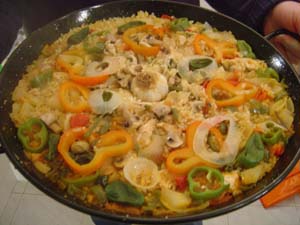
Gastronomy Andalucian Style

In the area around Malaga, birthplace of Picasso, are villages scattered amongst the inland mountains referred to as the Aljapuras region.

Other specialties of this region include the famous snow-cured hams and the Costa wines, which are quite fine.

In Spain the main meal is served during the midday break, and can be quite extensive with lots of wine and brandy to wash the meal down. This of course calls for a typical siesta of two to three hours for recovery, before returning to work for the afternoon.

Continue reading

Gazpacho From Andalaucia

This is famous peasant fare, originating as a simple concoction made for the poor fieldworkers from local fresh ingredients. Gazpacho became a standard offering after the Spanish brought tomatoes back from the New World. Traditionally olive workers and farmers out in the fields all day would bring quite the spread of home made goodies along for lunch, and often the entire family was along during harvest season, so food was served al fresco, in the fields. Gazpacho is also quite easy to prepare, with everything mashed together in a mortar and pestle and left standing in a cool spot alongside the fields. Pour it into a bowl, smother it with garnish and munch your way through a refreshing lunch. Continue reading

Grenada

See Grenada Hotels!


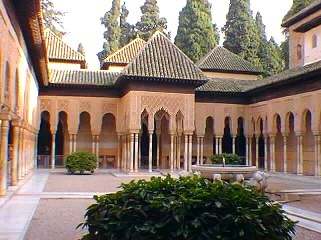
The timeless Alhambra

Grenada is an industrialized region at the foot of the Sierra Nevadas. It’s crowded, noisy, polluted, but full of life! The main attraction to the area is the famous Alhambra, a moorish palace that still retains its awesome beauty after many centuries.

Grenada was founded in the 8th century by the Moors and was a major seat of power for Moorish Spain until 1492, when the Spanish conquest wrested the city away for the Moors. During the Moors rule the city was a major center for art, literature, science and trade.