Tree Kangaroos

The elusive Tree Kangaroo is found in Australia’s Queensland, where they flourish in the lush tropical forests. There are two species, the Lumholz and Bennett’s Tree Kangaroos. The Lumholz is named after the Norwegian naturalist C. Lumholtz, and are also known as “Boongary” with a scientific name of Dendrolagus lumholtzi. The Bennett variety is known as Dendrolagus bennettianus, and is larger than the Lumholz. Eight other species of Tree Kangaroos are to be found in New Guinea.

Both varieties are about two feet tall, but their tails are often three feet long! The female bears one young kangaroo at a time, and carries it in her pouch like all marsupials. They are found sleeping in the branches of trees during the day, and become active at night, being nocturnal. Tree Kangaroos can leap as far as 15 meters (45 feet) from tree to tree. They do not hop about on the ground like regular Kangaroos – they walk.

Australia’s Tree Kangaroos thrive on a diet of leaves and fruits gathered high in the forest canopy. Their large stomachs can handle the massive quantities of leaves they must consume to survive.

There are far more Lumholz Tree Kangaroos, spread over a large area of the Wet Tropics. The Bennett variety is only found in a small area around the Daintree River in Queensland.

The Cassowary Bird of Australia

According to the Wikipedia, the Southern Cassowary is the second-largest bird in Australia and the third-largest remaining bird in the world. Adult Southern Cassowaries are 1.5 to 1.8 m (5½ feet) tall and weigh about 60 kilograms (130 pounds). A reclusive forest dwelling flightless bird, they have a long sharp claw on each foot that can be used to rip out your guts if you get too close. There are historical references to Cassowaries killing humans, but they are shy creatures, and will seldom reveal themselves to the casual tourist.


Cassowaries are a protected species in Australia. Continue reading

Filet of Sole Dieppoise

Filet of Sole Dieppoise

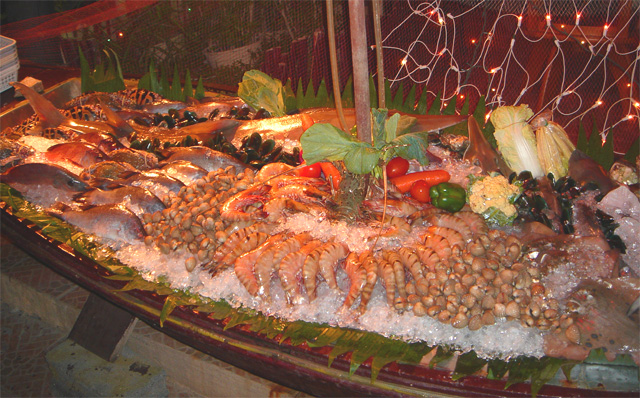
Visiting northern France is a pleasure, with many villages along the coast offering a variety of fresh seafood. The seaport of Dieppe, captured between high cliffs and the seashore was more of a resort in its heyday, but the fishermen still bring in a catch worthy of your attention, and the local cusine benefits greatly from this treat. Parisians would take the train here, then ferry over to England. The English used to come here to swim, now they have discovered warmer places like Spain… but that’s another story.

There has always been plenty of sole to catch in these waters, and one local offering is “Sole Dieppoise,” a tasty dish that also features another local favorite, mussels. Modern variations also feature shrimps and exotic mushrooms, but locals keep it simple with the sole and mussels swimming in a divine sauce. Here is my own variation of the classic seafood dish from Dieppe; easily made anywhere you can get some fresh filet of sole and mussels.

Continue reading

Cannabis Cup November 20-24 2005

The Cannabis Cup lives on in Amsterdam. In spite of many shortcomings, the venerable cup continues to hazily stumble on year after year, due to hefty subsidies from High Times magazine.

This 18th annual event will feature Patti Smith and her band, and the plan is to induct John Trudell into the Counterculture Hall of Fame.

If you are not familiar with John Trudell, or his band Bad Dog, you should be. According to his website, “Trudell, a Vietnam Veteran, served in the U.S. Navy from 1963-1967, attended college for a while and then dropped out. In 1969, Trudell participated in the occupation of Alcatraz Island by Indians of All Tribes, becoming a spokesman for Indians of All Tribes. After the Indians of All Tribes occupation ended in 1971, Trudell worked with the American Indian Movement, becoming national Chairman of AIM in 1973. Trudell was chairman of AIM from 1973 until 1979. In February of 1979, Trudell’s mother-in-law, wife and three children were killed in a fire of unknown origin.”

At that time he began to chronicle his experiences and his pain through music, and recorded a number of albums hailed critically by such artists as Bob Dylan. His material is a unique blend of poetry, Native instrumentation, blues and rock. With his new album “Bone Days” he has continued to try and raise the consciouness of all listeners to new levels of understanding.

The Cannabis Cup will be further enhanced with the legendary Patti Smith on hand performing her work. Patti Smith has been on the scene, literally, since the 1960s when she lived in New York City with famed photographer Robert Mapplethorpe. She worked in avant garde thater productions and visual arts, until she found her voice and the words to stir up the music scene, producing one of the first independent rock DIY albums, recorded in 1974.

Her career went on from there, with many bestselling albums including “Horses.” Patti Smith took a hiatus from 1979 thru the mid 1990’s, when she returned to the performing scene after the deaths of her husband and brother within a month of each other. Now she is a legend in her own right, showcasing the human condition with all its flaws and beauty through her music.

This year the Cannabis Cup will be held at the Melkweg, and the Sugar Factory. Finally the cup management wised up and found a spot right by the Melkweg to use for the displays and seminars, etc. that always accompany the music festival that is the heart of the Cannabis Cup.

The Sugar Factory was known as the Amuse Theater previously to this May, and its door is directly opposite the entrance to the Melweg.

The Melkweg and Sugar Factory are located right off the Leidseplein, which is easily reached from anywhere in Amsterdam by tram, taxi or foot.

Here’s hoping your Cannabis Cup experience is everything you expect it to be!

~Martin Trip

Strolling around the Jordaan

Art and Culture of the Jordaan

Once a working class area, Amsterdam’s Jordaan has become greatly sought after. The converted warehouses are especially popular, and the Jordaan is now inhabited by a colorful mixture of students, well-to-do businessmen and creative professionals. The Jordaan oozes atmosphere with its narrow streets, picturesque canals, old monuments, many courtyards, markets and art studios.

Continue reading

Private Art Tours

Private Art Tours with Drs. Kees Kaldenbach

I am an academic tour guide, providing guided tailor-made Private Art Tours. I travel with my clients either by car or by public transport. With this message I would like to inform you about my travel and guide options in The Netherlands, also available in the upcoming Rembrandt year 2006.

I prefer to guide small and select groups to museum visits and to walks in historic Dutch towns.

Numerous TV and other media networks – among which BBC2 – have sought my expert assistance and TV appearance. Having an academic background, my presentation is very communicative and therefore open for a wide audience.

For the Dutch National Tourist Board I often take foreign journalists on walking tours of Amsterdam – to tell them about historic Amsterdam but also about present-day Amsterdam.

Contact:
Private Art Tours
Drs. Kees Kaldenbach
Haarlemmermeerstraat 83 hs
1058 JS Amsterdam

tel NL+20 – 669 8119
cell NL+6 – 2868 9775

https://www.xs4all.nl/~kalden/verm/Vermeer_lecturesENG.html
https://www.xs4all.nl/~kalden/verm/VanGogh_lecturesENG.html
https://www.xs4all.nl/~kalden/verm/rembr_lecturesENG.html

Mobile Phone Access in Australia

Unlike Europe, the US & elsewhere, mobile phone use in Australia tends to be expensive. Telstra, Optus and Vodaphone are the big three operators for mobile telephony in Australia. Telstra, the once dominant monopoly in the country still offers uncompetitive rates and restrictions. Optus is little better, helping to keep high charges for everyone. Vodaphone is trying to lower the bar, offering better prices and more independence, but doesn’t have as wide a coverage as the other two. Virgin is another recent entry to the market in Australia.

When you buy a new phone and opt for any of the companies except Vodaphone, you’ll be committing yourself to using their service as they don’t let you switch sim cards without an extra fee (around A$80). If you already have a GSM phone, you can purchase a sim card from any of the companies for use in your phone. They usually come with $A25-$30 phone credit since they cost the same to buy.

In my experience mobile phone charges run about $1 per minute, and some even charge you extra for retrieving your voice messages. Text messages run around 25 cents unless you purchase a plan that gives you a better deal. So that $30 of credit can easily be used up with just a few calls.

If you’re going to be in Australia for awhile, it may be worth it to signup for a long-term contract, as the rates will be far cheaper than the prepaid plans. You can also get a better deal if you include your home phone and internet access on the same account.

Be aware that rural areas are not always covered by the major companies. Vodaphone in particular seems to concentrate on the major cities and towns, with poor service elsewhere. Hopefully this problem will be eliminated once the companies learn how to play together and share their lines without charging exorbitant rates.

Both GSM and CDMA mobile standards are in use in Australia. Supposedly the CDMA offers better rural coverage, but CDMA phones don’t use sim chips which means they won’t work in Europe and other areas.

We encourage you to not use Telstra as it costs the most, unless it is the only carrier available for your area.

Internet Access in Australia

For the traveler in Australia there is Internet access available in most towns, with the remote regions of the outback having less coverage. In backpacker friendly places you’ll find excellent access near or inside hostels, caravan parks & hotels. In the peak season these places are often packed, sometimes with people queueing up to get online.

The access is usually good to excellent, although in peak periods the Internet does slow down considerably. If you have to wait more than a minute for pages to load, you might want to try again during a less crowded time.

Continue reading

After the Tsunami


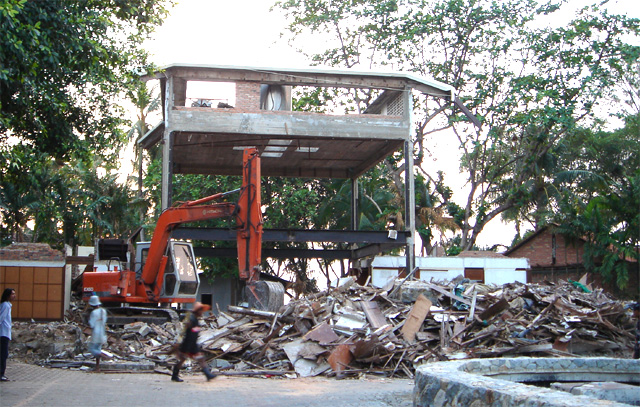
This business on the beach in Patong, Phuket was hit hard by Tsunami

On Decemeber 26, 2004 a large Tsunami hit the coasts of Thailand, Indonesia, Sri Lanka and India. The southwest coast of Thailand was hit hard. Hundreds of people lost their lives, with damage to business along the shore in the billions of dollars. The affected areas include the popular tourist destinations of Phuket, Krabi, outlying islands like Koh Phi Phi and Phang Nga, the province north of Phuket.

Continue reading

Ko Samui


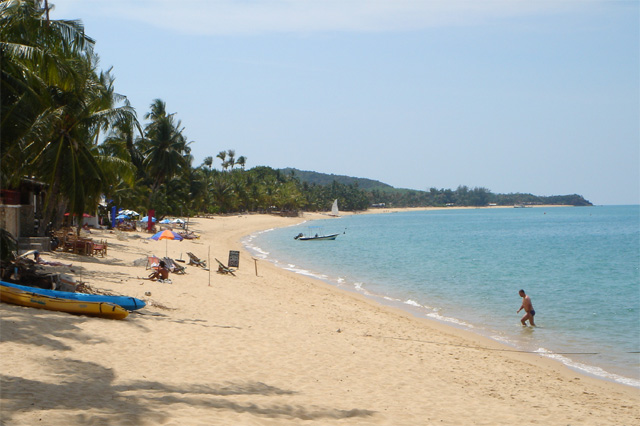
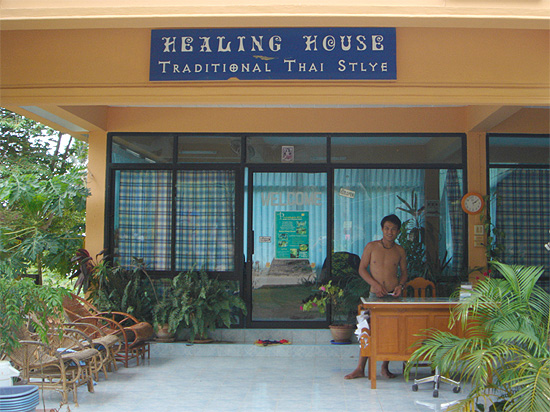
Laid Back Mae Nam Beach

Once upon a time, Koh Samui was known only to adventurous backpackers who would spend days taking long bus rides and a long ferry ride to arrive on this tropical island paradise. They would shack up in a primitive bungalow on the beach for weeks at a time, blissed out on the sun, sea, sand and tranquility of this remote island.

Continue reading