Las Ramblas (La Rambla)

This tree-lined pedestrian thoroughfare runs from Plaza Catalunya to Barcelona’s port district, and is a major attraction. It’s called Las Ramblas because it consists of five different Ramblas or boulevards one after the other. A casual walk down Las Ramblas is a must for all tourists. It’s a wonderful, vibrant part of the city where street vendors and performers vie for your attention.

Continue reading

Getting Around Barcelona

Barcelona’s Metro

Barcelona’s transportation system is world class, efficient and cheap. I recommend getting a street map right away. These will usually indicate the Metro stops and tourist attractions. The Metro is one of the best ways to get around town, avoiding traffic jams, and city smog. The cars and stations are clean, relatively modern, and there’s usually an electric sign telling you how long the wait is for the next train (rarely more than 3 minutes).

A single trip costs a Euro, but there’s a whole slew of discount cards available for multiple journeys, and these are an excellent deal. If you’re going to be in Barcelona more than a day or two, I highly recommend getting the T-10 card, which allows you 10 trips within the city, and costs 5.80 Euros. That works out to only 58 Eurocents a trip, and that includes an hour and 20 minutes of travel time, which can easily get you anywhere you need to go. These can be purchased at the station window or from one of the automated machines. If you’re going to be staying longer, even better discounts are available on a monthly or yearly basis.

Continue reading

Parc Güell

Antoni Gaudí designed this park around 1900, as a residential area surrounded by nature. Gaudí lived here while he worked on his many projects in Barcelona. Famed around the world, Park Güell incorporates Gaudí’s flamboyant style into a well-planned, well-used public space. Lush gardens, winding paths, fanciful buildings, open spaces, mosaic patterns, angular columns, colorful fountains all compete for your attention. The park is a photographer’s delight with so many vantage points, each yielding splendid views of the park’s attractions, and the city itself.


One of many unusual features in Parc Güell

The Casa Museu de Gaudí is the house where Gaudí lived while working on his many projects he did not design it, however. It’s been turned into a museum, and can be visited most days. Hand-carved ornate woodwork, purple marble, and Gaudí’s own furniture are highlights of this museum. Surprisingly, Gaudí’s own bedroom, with a small single bed, and austere furnishings are a sharp contrast to his public works. Perhaps the man did most of his dreaming elsewhere…

Continue reading

IDFA 2002 – International Documentary Film Festival Amsterdam

International Documentary Film Festival Amsterdam
November, 2002
Review by Skip Stone

What do you believe in? That theme was one of the deeper questions answered by dozens of documentaries competing at the 15th Annual IDFA. It’s an interesting query for these turbulent times, when whole belief systems are being politicized and many people around the world are sacrificing their lives for what they believe in.

The domination of commercial film by American corporations has created a situation where audiences expect movies to entertain, rather than inform, inspire or critique. Documentaries on the other hand, seek to fill in these huge media gaps by presenting more stories that effect us on a deeper level, challenging our existing beliefs and stimulating intellectual debate. A good documentary will go beyond just updating your data, but will involve you in the life of the participants, and leave you asking more questions about the subject.

Continue reading

The 15th Annual High Times Cannabis Cup

The 15th Annual High Times Cannabis Cup
Amsterdam, November, 2002.
Review by Skip Stone

Last year’s Cannabis Cup was held under the shadow of 9/11. Numbed by the events of the prior 2 months, the 2001 Cup seemed muted. It felt odd to be so concerned about Cannabis when the future appeared so uncertain and fraught with danger. Yet it was an important affirmation of free speech during a time when our liberties were being sacrificed out of irrational fear.
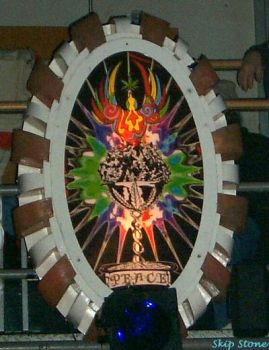

The Peace Cup

The vibe for this year’s Cup was far more upbeat. Carrying on the tradition of the counter-culture, High Times & 420 Tours designated this year’s event the Peace Cup. In a time when our government is insistent upon dragging the world into yet another senseless war, it takes courage and conviction to speak out for peace. One of the great benefits of Cannabis is that it presents users with an alternative perspective, a more peaceful, serene outlook, that many could use these days.
Continue reading

Spanish Cuisine

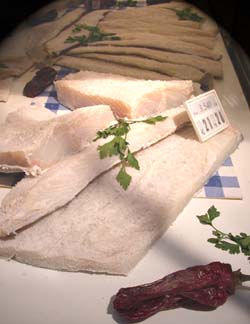
Salt fish bacalao on display in a Barcelona window…

Spanish food cannot be described in just a few words, it is as complex as Asian food, varied as all European fare put together, and reflects the diversity of Spain itself. As the popular saying goes: in the south of Spain they fry, in the central areas they roast, and in the north they make stew. But even this statement may prove to be too broad in it’s conclusions.

Traditionally, food in Spain was a mostly a reflection of the materials they had in the various areas. Remember that once upon a time refrigeration and easy shipments of fresh food hundreds and even thousands of miles from its source was impossible, thus you made do with what you had locally. In the past Spain enjoyed healthy peasant fare for the most part, stretching a hambone or a few scraps of chicken into a meal for the entire family out of basic necessity. It has only been since prosperity returned to the Spanish during the 1960s that they have been able to enjoy products and foods imported from around the world.

Continue reading

Tortilla Española

Spanish Omelette

One must remember that in Spain, a tortilla is not what it is in Mexico. Nor is it anything like what Americans call a Spanish Omelette. A “tortilla española” is usually consumed as a tapa, or side dish, for lunch or dinner. This hearty dish of eggs and potatoes is often cut into wedges and served cold. Breakfast in Spain is usually just some crusty bread and lots of coffee.

The following recipe will feed four, and is quite simple to make.

Ingredients:
6 potatoes, peeled and chopped fine
1 large onion, peeled and chopped fine
1 cup olive oil
6 beaten eggs
salt and pepper

Preparation:
In a large skillet heat the oil until aromatic, and cook the potatoes and onions over a low heat until softened. Make sure you stir the mixture frequently and press flat with a fork while cooking.

When cooked, remove the onions and potatoes, draining the extra oil away.

Save only a tablespoon or so of the oil in the frying pan, discarding the rest.

Mix the potatoes, onions, and eggs, pour into the pan and cook until the bottom is browned. Season to taste with salt and pepper.

Flip the omelette in one piece by upturning the contents onto a plate; add a tablespoon of olive oil to the pan, then put the omelette back into the pan. When the bottom is browned, serve at once, or cool and cut into wedges for later.

Sopa Almendra al Uvas

Cold Almond and Grape Soup

This Andalucian treat is to be found around Marbella, on the south coast of Spain. Traditionally prepared with a mortar and pestle, we now have the modern convenience of the blender, which makes this quite easy to prepare. A wonderful cold soup for those lazy summer days, perfect for lunch around the pool or in the garden.

Ingredients:

1 cup slivered almonds

2 or three cloves of garlic, peeled

salt to taste

¼ cup olive oil

1 tablespoon red wine vinegar

2 cups water

½ pound green grapes, seedless if possible, if not slice them and take out the seeds

Put the almonds, garlic, and olive oil in the blender, and blend until a smooth puree is formed. Add the vinegar and blend until creamy. Pour into a large bowl, and stir in the water and ice cubes. When the ice has melted, stir again and serve in chilled bowls.

Pollo en Salsa de Almendra

Chicken in Almond Sauce

Ingredients:
2 cups water
1 cup flour
salt and pepper to taste
1 whole cut up chicken
1 cup olive oil
1 onion, chopped
4 to 6 cloves garlic, chopped roughly
1 cup sherry (the real thing – not American cooking sherry)
1 cup ground almonds
1 cup fresh peas

Preparation:
Brown the onions and garlic with a little olive oil in a large heavy pan that has a lid, then set aside. Mix the flour with the salt and pepper, and coat the chicken with half of this mix. Using the same pan with a little more olive oil, brown the chicken pieces on all sides. Put the chicken aside. Lower the heat, then stir the rest of the flour into the hot oil in the pan, and while stirring add the sherry. Keep stirring while you add the water and almonds, then bring to a boil while stirring constantly. Add the chicken pieces, onion and garlic, and the peas. Cover and simmer for a half hour or more until the chicken is tender and falling apart. The sauce should thicken quite nicely, and this dish is usually served on a bed of rice.

Pollo a la Cazadora

Hunter’s Chicken

As they say, in the north of Spain, they stew. Here is a stewed chicken recipe from Pamplona, which features LOTS of garlic. This recipe serves four.

Ingredients:
1 whole chicken, cut into quarters
1 large onion, chopped fine
6 cloves garlic, chopped fine
1 cup olive oil
1 tablespoon flour
salt and pepper
1 cup dark beer

Preparation:
In a large heavy pan with a lid, brown the chicken pieces in hot oil. Add the garlic, beer, salt and pepper, flour and beer. Stir all ingredients together and cover the pan. Simmer over a medium heat until the sauce thickens, about 45 minutes. Serve with some crusty bread and a red wine.