The Dutch Language

If you aren’t Dutch or didn’t study Dutch in school, then don’t even think of trying to speak it! You’ll be chastised by everyone in Holland. They frown upon anyone trying to speak Dutch who hasn’t got a good handle on it. It IS a difficult language for most to master. It’s only spoken and understood in a few places around the world, so why learn it? Most Dutch in the cities speak English very well anyway. If you want to learn the language there are courses available at the Universities, and for many people wanting to live and work in Holland it is essential. If you’re going to be in Holland for an extended stay you can pick up some useful expressions that will serve you in daily transactions, but don’t get your hopes up that they’ll accept your attempts.

I think the reluctance of Dutch people to help others learn the language is no reflection on us visitors, but more on their own attitudes towards their language. There’s a lot of regional variation and dialects. And there’s been an ongoing debate about how the Dutch language should look in it’s written form that still hasn’t been decided. Many times I’ve asked my friends how to pronounce a word, only to hear two completely different versions. Those in the south of Holland use a softer version of the language with more rounded ‘g’ sounds. While up north they use a harder ‘g’ sound. And in Friesland they say their language is closer to English than Dutch (not that I can notice). Most Dutch can’t understand the Frieslander’s Frysk.

Dutch is similar to German, but it seems more Dutch can speak and understand German than the other way around. In fact the Dutch are some of the most multi-lingual people on the planet. English, German, French, Indonesian and Spanish are some of their second and third or fourth languages. Dutch immigration has added Moroccan, Turkish and Chinese to the language mix. Thanks to tourism and their history of trade, the Dutch have always had an easy time with languages. Of course I think once you’ve mastered Dutch, the rest are easy! Then again, since Dutch is not widely spoken, it helps to know another language.

The Gay Scene

Amsterdam is world famous for its gay scene, and the Dutch tolerance allows it to flourish. In 1998, Amsterdam hosted the Gay Games and the city paid millions of guilders to help sponsor and promote the games. Thousands of people participated in the athletic events and tens of thousands more came for the party! Although it wasn’t successful financially it certainly had a positive impact on the gay community. Warmoesstraat in the Red Light District, Reguliersdwarstraat, and Kerkstraat are popular gay scenes with bars, clubs and cinemas. Straight Dutch often mingle with the gay crowd, since they like a good party too!

The Dutch have just passed the most liberal Gay Marriage Law in the world! Dutch gays now have full marriage rights and benefits in Holland, including , adoption, divorce, pensions and inheritance. Unfortunately, few other countries will recognize a Gay Dutch marriage and these laws do not apply to tourists, as you must be a citizen or official resident to qualify. It’s just another way the Dutch are showing the world “what should be” when tolerance and freedom are actually allowed and not just bogus claims of so called “democratic societies”. The Dutch even allow gays in the military.

For an in-depth study of the history of Amsterdam’s Gay Bars, check out: Amsterdam Gay Bar Culture.

Popular Culture

The Dutch seem to have an endless fascination with trendy fashions and imported culture. In addition the Dutch are very creative when it comes to initiating new fads. One example is the Big Brother TV & internet show which originated in Holland, where it became a big hit, then the Germans copied it and finally the Americans had to have their own version. Of course by that time the Dutch edition was “old fashioned”, and washed up. Another popular show which is due to be copied in the U.S. is the one where the Dutch pay 1000 guilders to people to do outrageous things in public. Like baring their asses and getting whipped (I’m not making this up!). For some reason this appeals to the Dutch psyche and I predict it will be a big hit in America (it’s already on the Internet).

Another popular trend in Holland is the willingness to expose one’s secrets and flesh on TV. There was this one show where a very sexy, scantily clad woman would interview scantily clad guests in a bed on the set. Often she would ask them to remove what little clothing they had and expose themselves. Believe it or not, this seems very healthy. If we don’t keep secrets from each other, we can be our true selves. Besides making for fascinating entertainment and gossip, it therefore has therapeutic value (catharsis) for the individual and the culture as a whole.

The Dutch seem to be almost obsessed with American fashions. Designer clothes, Hollywood movies, slang, etc. The U.S. is a major destination for vacations and most Dutch make several trips to visit the states.

The Dutch Economy

The Dutch have a vibrant, diverse economy. Oil, Electronics, Banking, Tourism, Pharmaceuticals, Tulips, Dairy farming and Agriculture are the big industries in Holland. Many of the biggest companies are partially owned by the royal family including Royal Dutch Shell, KLM, and the biggest banks. Unemployment in recent years has been so low it’s staggering, about 2%. The Dutch are desperate for skilled workers especially in high tech fields. Other large Dutch companies include Phillips Electronics, ABN-AMRO Bank, Ahold (food). These are huge multinationals that are presently buying up businesses in other countries including the US. So you might say the Dutch are entering their second ‘Golden Age’.

The Dutch banking system is rather unique. Personal checks are rarely used in Holland. Instead they have a system of Giros which are like a check, except you’re often expected to present it to your own bank to credit someone else’s account at another bank. In other words, only your bank processes your giros. At least that’s how I figure it. Credit card use is minimal since the Dutch don’t like paying interest. Smart cards (debit cards with a chip) have been in use for years. They can be used for phone calls or to get cash from special machines (not ATMs). You can transfer money from your account into the chip, which then dispenses the money or pays for services as you use it. So it’s like having cash, without the currency in your pocket.

In general the Dutch are very secretive about money and won’t discuss their own situation at all. They’ll all talk about everyone else, but themselves. The Dutch currency is perhaps some of the most striking on the planet. Colorful, with great graphics, images, watermarks, metal strips, shiny inks they are virtually irreproducible. Unfortunately, the Euro will be introduced on Jan 1st, 2002, and then all those beautiful colored banknotes will be gone.

The Dutch have a great fondness for money and horde all they can. It’s the national pastime. Getting a Dutchman to part with a guilder can be a difficult task. The only thing worse is trying to do business with them. I’m not sure if it’s a clan mentality, but it’s definitely a by-product of the system of guilds that locked business into the hands of those who “belong”. To an outsider this is daunting, and can be an insurmountable obstacle.

Fortunately the EU has brought about much change at last to the way the Dutch do business. In fact any foreign company can establish itself in any EU country, then do business in all the others without all the hassles of dealing with each government separately. Likewise workers can freely move around the EU and find suitable work and live wherever they choose. Of course you must be a national of an EU country to do this! So you now find an influx of Spanish, French, Italians applying for jobs in Holland. Good thing, as their skills are needed!

Drugs in Amsterdam


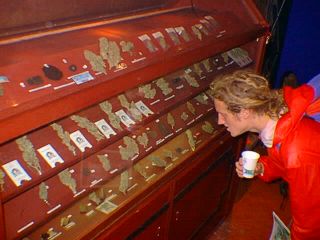
Display of Marijuana and Hashish at Cannabis Cup in Amsterdam.

The Netherlands’ tolerant approach to drug use is the source of much international debate. The Dutch are constantly having to defend their position on “illegal” drugs due to pressure from other countries especially France and the U.S. If only these other countries would adopt the Dutch attitude towards drugs, they would see their “drug problem” and most related crime evaporate overnight. The Dutch statistics bear this out. By decriminalizing the use of soft drugs, and treating even hard drug use as a disease, the Dutch have created the model that others should emulate. By dividing drugs into soft and hard categories, they can deal with every situation calmly, rationally and effectively.

The Dutch have a far greater problem with alcoholism (and tobacco) than with any “illegal” drug and they know this. By allowing people to purchase and consume marijuana in licensed coffeeshops, they not only remove the stigma of being a marijuana user, but they completely remove this as a “criminal activity”. Thus it becomes safe to purchase and use the drug without a criminal element involved (although they have cracked down on growing the plant in quantity, thanks to the aforementioned pressure from other nations). The fact is you can walk all over Holland and see marijuana plants growing in windows, on houseboats, in backyards, etc. Current law allows Dutch gardeners to grow 5 plants, but no lamps are allowed (only sunlight, a rare commodity). But there is NO FEAR, associated with marijuana, hence a true enjoyment of this magical herb that can heal, relax and enlighten.

See The Dutch Coffeeshop Scene for more about smoking cannabis in Holland.

As far as hard drugs like cocaine and heroin, the Dutch are firmly keeping these drugs illegal, but not prosecuting the users. There are many treatments available for those addicts seeking it. They go so far as to give these addicts their heroin or methadone to keep them from stealing to get it. Again it is seen as an illness and treated like one, not turning the addicts into criminals. Warning! Ecstasy is considered a hard drug in Holland!
Dutch Treat?

Perhaps it’s just their infamous thriftiness or a rationing behavior left over from the war days, but the Dutch are not known for their generosity when it comes to food. Those sandwiches I mentioned usually have just a couple of ingredients like thinly sliced cheese and butter, and not much of either. Dutch bars serve the smallest beers in Europe, usually 6 to 8 ounces. Once I took a brief trip into Germany and went to a pub there, ordered a beer and was amazed when a nice half liter was put in front of me (it even had a marking on the glass to show the quantity). I was so astonished I said “Now this is a beer. You never get this in Holland” and everyone in the packed pub just cracked up and agreed!

Then there’s the cookie thing. There’s a legend that the Dutch only offer their guests ONE cookie with their very good strong coffee. Then they take the cookies away. I can confirm this is the case as the Dutch do serve a single cookie with coffee (don’t bother to ask for a second), even in restaurants. Then there’s that coffee. Just like many other European countries, it’s served in espresso cups. You can get it with steamed milk and the cup will be slightly larger. I remember my brother’s frustration at trying to get a cup of regular joe in Amsterdam. Everywhere he went he asked for ‘regular’ coffee. Of course he got espresso! He was dying for a nice big mug of ‘brown water’ with milk. He never got it!

Then there’s the movie theaters. If you’ve ever had to stand on line to buy tickets in Holland you’ve probably wondered why it takes soooo long for the line to move. I was curious too, so I watched what was happening. OK, I noticed your typical questions. And the Dutch theaters sometimes have several different prices for seats depending on the location or type of seat. (sometimes you can get served champagne with your movie!). So there is more to choose from. However, I discovered what was really holding up the line was that every Dutch person was buying their own ticket! Not only is it rare for the Dutch to treat their friends, but they seem reluctant to give others money to buy the tickets. This is the origin of the phrase ‘Dutch Treat’. In addition after each purchase, the Dutch must count their change and the remaining guilders in their purse. And so wait we must!

Despite their tightwad ways, the Dutch are very generous when it comes to donating to charity or worthy causes. But it must be a cause they really believe in.

Crime & Grime

Crime is an interesting social phenomena in Holland. In a society where few things are considered crimes, there are far fewer criminals. Makes sense, no? And criminals are treated very well in Holland. When someone gets arrested, they release a minimum amount of information. No name or just a partial name is issued to the public. When convicted a person can look forward to a very nice stay in one of Holland’s jails which allows every convenience including a room for sex. It’s truly a humane system and treats people like human beings, not animals.

The Dutch system of crime and punishment, that rarely makes a big deal out of petty crime (like theft), is responsible for a society amazingly free of violence. The Dutch are truly shocked when there is a violent crime or a murder. That’s because there is little reason to commit violent acts. Indeed, often the law itself is to blame in other countries where violence is committed to commit or cover up lesser crimes. The Dutch have discovered the amazing truth that if you don’t make criminals out of people for personal vices, they won’t be compelled to break more serious laws or be violent to keep their vices secret .

Continue reading

Dutch Cheese

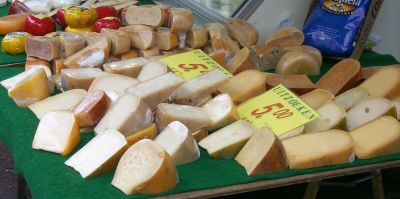
The dutch have a great fondness for cheese and milk products. Perhaps this is due to the fact that Holland is the world’s largest exporter of dairy products! Every shopping street in Amsterdam has one or more cheese shops where you can sample the wares of this industry. Huge wheels of Gouda line shelves in the store. Pieces large and small are cut on demand, and free tastes are always given (how unusual for the Dutch to give something away!). Other dairy products like fresh yogurt and quark (sour cream) are excellent.

Most of these shops also sell breads and make sandwiches for lunch. Some of the more popular cheeses are Boerenkaas (farmer’s cheese) which is classified according to it’s age, young, medium, ripe (belegen), extra ripe (aged). Variations include herbs or cumin seeds scattered in the cheese. We really enjoyed the Geitenkaas (goat cheese), which is white and flavorful. Aged cheese like Oude Amsterdam (black wheel) is exceptional! Cheese is usually consumed with bread in sandwiches (broodjes), or with the light crispy Dutch crackers. Like most European countries, the Dutch are very proud of their cheese industry, and no visit would be complete without a visit to a cheese store to sample the wares.

There are picturesque cheese markets in Alkmaar and Purmerend for the tourists and some towns like Gouda still have a real cheese market. Alkmaar also has a Cheese museum.

Dutch Canals

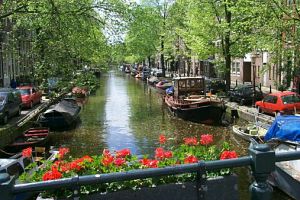
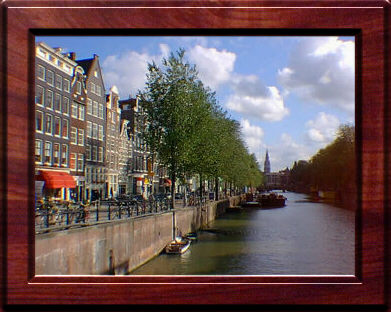
You can go anywhere in Holland, and never be far from a canal. These waterways are as beautiful as they are practical. Holland canals serve a number of very important purposes. First they were used to drain the land so homes and farms could be established where once there was water.

Second they provide a means of transport for goods from inland regions to the sea. Third they are homesteads for thousands who live on houseboats. Houseboats are very trendy and can be seen on most canals in Amsterdam. Some are available for rent, however they have become very expensive due to their popularity.

Continue reading

Bicycles

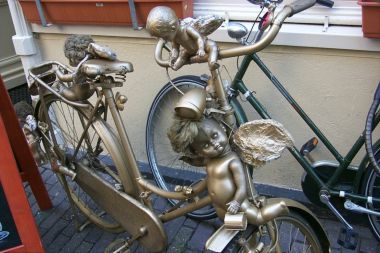
Holland is one of the flattest countries on the planet, making it ideal for bicycling. The Dutch have far more bicycles than automobiles. Everywhere you go in Holland you’ll see people getting around by bike. In Holland bikes are given a status accorded few modes of transportation. Bike paths exist next to every major road through the countryside into the center of the big cities. You can explore all of Holland by bike if you choose. For the Dutch it is not just a recreational sport, it is a primary means of transport to work, school, even the market. Bikes typically have either a basket up front, or dual panniers on the rear. These come in handy not just for school books or groceries but are often used for children, animals, plants, you name it!

Continue reading